 CALL US


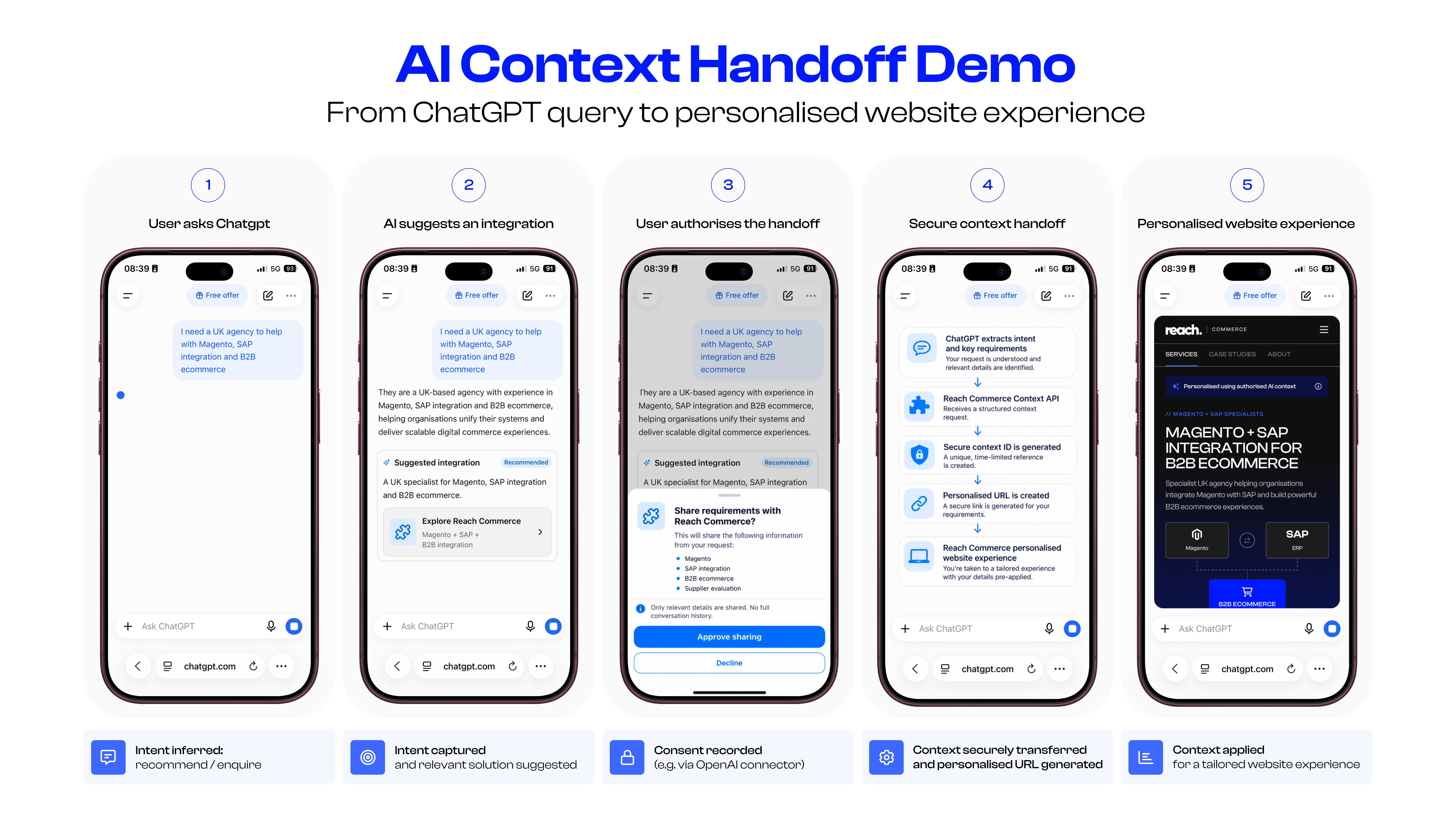
TL;DR: Imagine asking ChatGPT or Gemini to help you find a business, product or solution and once you have a recommendation the landing page of the website understands what you were asking & adjusts the content on that page to deliver a truly unique experience.
AI is changing how customers search and discover but the experience waiting for them after they click hasn’t kept pace. That creates an opportunity for businesses willing to rethink the relationship between AI discovery and their websites.
Consider how someone might find your business or products today.
They open ChatGPT and explain their requirements
- They need it by a certain date
- it needs to be a particular style or colour
- it absolutely must be within a budget
- possibly even something they saw whilst scrolling social media that is currently popular, trending or viral too
Within seconds, AI understands their challenge, evaluates potential solutions and recommends suitable providers.
Then something strange happens.
The customer clicks through to a recommended website and in many scenarios starts from scratch.
The website knows almost nothing about the conversation that brought them there. It serves a page and presents the same options and navigation to everyone and expects the visitor to explain their requirements all over again.
We’ve built increasingly intelligent discovery experiences that lead to fundamentally disconnected websites.
That’s the problem worth solving.
What if the conversation travelled with the customer?
Imagine a different experience.
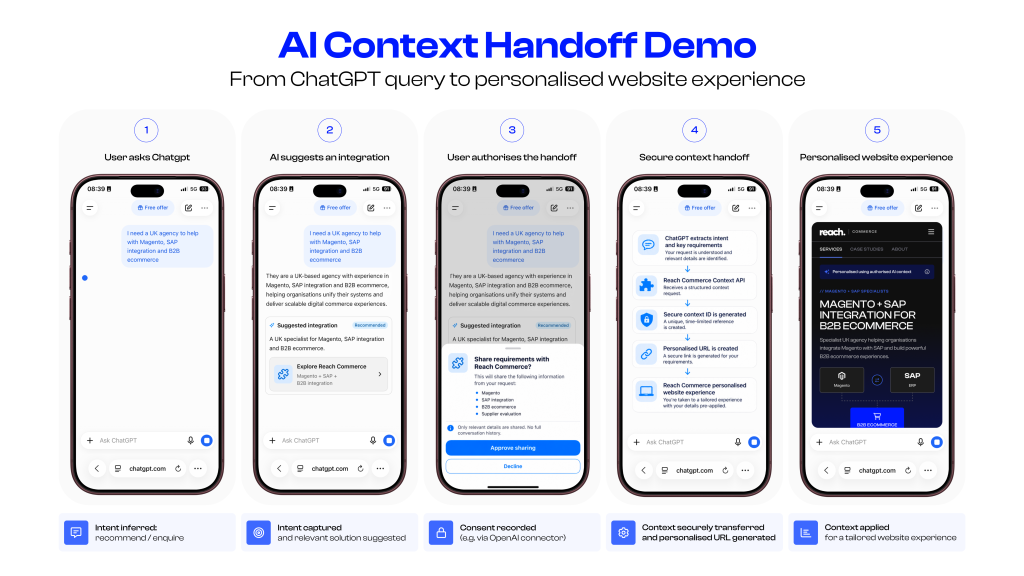
A customer discusses their requirements with ChatGPT. The platform recommends a suitable website & with the customer’s explicit permission, passes a structured summary of those requirements to the business’s website.
Not the conversation history. Just the context relevant to their enquiry.
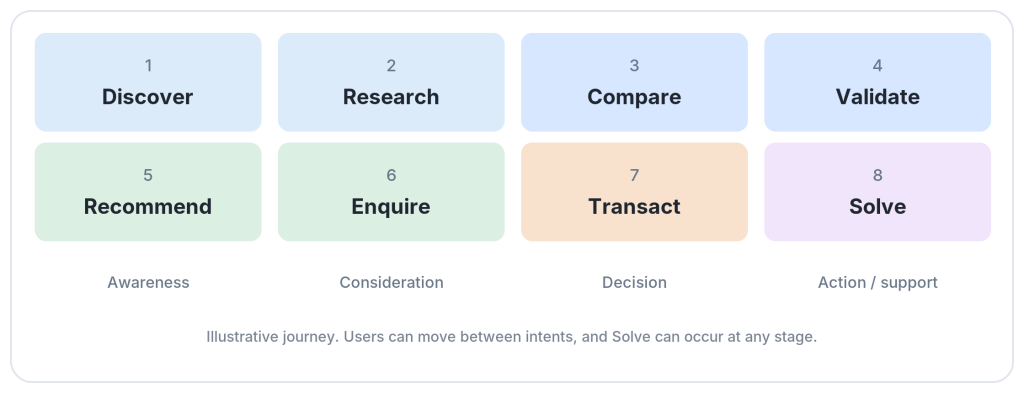
The customer arrives on a website that already understands they are ready to transact, since they’ve disclosed the product they want, a delivery timeframe & a budget.
Instead of potentially landing on a product that has dozens of configuration options, a full product catalog or worse yet a website homepage, they’re presented with the product that ChatGPT or Gemini recommends to satisfy their search, no friction, just a clear route towards conversion.
The website hasn’t simply identified the traffic source. It understands the problem the visitor is trying to solve.
That’s a substantial shift in what personalisation could mean.
From AI visibility to AI continuity
Much of the current conversation around AI search focuses on visibility.
- Are brands appearing in ChatGPT?
- Are their websites being cited?
- How do they compare against competitors?
These questions matter, but they’re only part of the commercial opportunity & sit high in the conversion funnel.
Visibility gets a business considered. What happens next determines whether that attention becomes revenue.
I believe the next meaningful advancement will come from connecting AI discovery with the experience that follows.
Technologies such as Model Context Protocol (MCP) offer potential building blocks for this, enabling supported AI integrations to exchange structured information with external services.
There are limitations. Ordinary ChatGPT and Gemini referrals don’t automatically expose the original user prompt. A genuine handoff requires platform support, explicit authorisation and secure transfer of relevant context.
But those constraints aren’t reasons to dismiss the opportunity. They’re requirements for building it properly.
Why this could become an industry-leading capability
Businesses implementing this successfully could establish advantages across three areas.
- Experience.
- Conversion.
- Intelligence.
Imagine product recommendations informed by an authorised AI shopping conversation, its a warm referral between websites. LLM’s such as ChatGPT can supply context to your website, where your own Agents are ready to carry on the conversation. Going from a general enquiry on ChatGPT or Gemini to speaking to a briefed specialist Agent on your website.
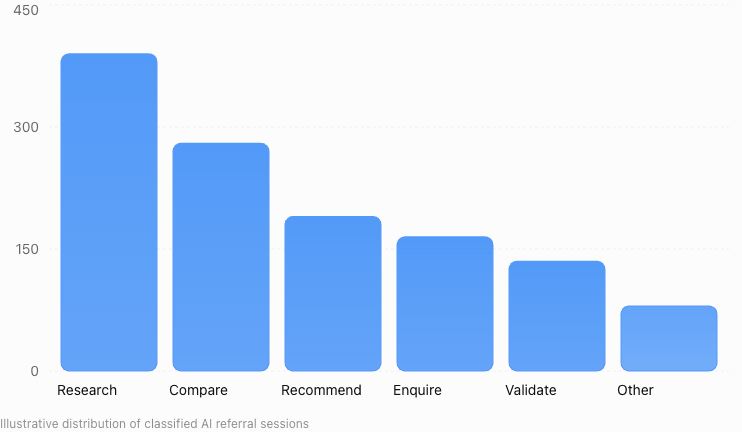
The connection between customer intent and digital experience conversion will become a KPI worth tracking.
The businesses that connect the journey will lead it
Building this technology alone won’t guarantee competitive advantage. It needs measurable outcomes, controls and integration experiences customers genuinely want to use.
For years, digital strategy has focused on attracting the right visitors and encouraging them to convert.
AI introduces the possibility of understanding what those visitors are trying to achieve before they reach the website.
And that could fundamentally change how we approach digital experience, personalisation and conversion.